






Christian Deceptions Blog

Heads UP! There are real answers to all the religious nonsense that people are tired of dealing with inside and outside of today’s Chistian churches. The surprising insight is that many Christian churches could actually increase their memberships by two to ten-fold
Breath of Fresh Air: This author sheds light on many areas that some churches really want to keep in the dark because it suits their purposes for greed, gluttony, control, power and wealth. Whether you belong to a Christian church or not … you really need to do yourself a favor and find out what is in your Bible.
Warning: Many readers are already exasperated by religious doctrines and all the fussing about who is right and who is wrong. Plus, they are worn out with all the confusion and claims by denominational posturing. If you do not belong to a Christian church … this information could help you decided whether you want to go … stay … or change churches.
Stick Around: Many are already ready to leave this blog right now because they are tired of all the seemingly useless nonsense about religious rules, regulations, and control. Stick around … you could get some refreshing insights to many of the real inside issues in Christian churches. Also, have you heard of the Millennium? Its purpose is NOT what you have been told. Find out at the end of this blog.
Spoiler: There is a book at the end of this blog that does an excellent job of setting the records straight about much of the deception present in modern Christian churches. Also, some folks do not like long blogs … and others just want the dessert before the full course. So, without further ado … and just for them … here is the featured main book link for GOD’s Truth About Blind Faith … for Dizzy Dummies by Rev. Randall Braxton Spell, Jr. … Click here: https://www.amazon.com/dp/B0CVG53PFX
Blind Faith, Prosperity Preaching, the Trinity, and the Eternal Soul
Many confused Christians feel the strain when church teachings, money appeals, and church doctrines pull them in different directions.
That strain matters, because Blind Faith is not humble trust in God, it is belief that refuses testing, correction, or Scripture read in context. When that kind of faith takes root, it can excuse foolishness and hide serious error behind a religious curtain
This post takes a careful look at ideas, not a swipe at sincere believers who want to follow Christ faithfully. It will weigh blind faith, prosperity preaching, the folly of the Trinity doctrine, and the claim that every person has an eternal soul. With that ground set, the next step is to test these teachings by Scripture instead of habit, pressure, tradition … or the doctrines of men (i.e., Church Doctrines).
Blind faith sounds spiritual, while hiding errors to exert clergy control
Blind Faith often wears a religious face, and many believers mistake it for humility. Yet faith that refuses testing is not strong, it is unsafe. God never asks His people to shut their eyes to truth, silence their conscience, or submit to error just because a voice sounds certain.
That is where misdirection begins. A person can look devout while drifting far from Scripture. When people treat untested claims as holy, foolishness gets praised and correction gets pushed aside. Luke 17:6 is NOT about blind faith. It is about people who have NO faith at all.
Faith and gullibility are not the same thing
Biblical faith rests on what God has said, and it shows itself in obedience. Gullibility does something else. It accepts claims because they sound spiritual, come from a respected leader, or stir strong feelings.

In Scripture, faith is never a license to believe without thought. Abraham trusted God because God had spoken. The prophets called people back to God’s word. For example, the Bereans were praised because they tested what they heard by proof in the scriptures. That pattern matters. Real faith listens, weighs, and obeys.
Gullibility, by contrast, lowers its guard. It treats proof as pride and questions as rebellion. That is foolish because a person can be sincere and still be wrong. Tender language, tears, and confidence do not turn error into truth.
Many confused Christians also mistake silence for faithfulness. They stay quiet when teaching sounds strained. They ignore clear problems because they do not want conflict. Yet silence can protect error just as easily as it protects peace.
Others confuse fear with reverence. They worry that asking for biblical support means they lack faith. Still, honest testing is not unbelief. It is one way love for truth acts.
Loyalty can also be misplaced. Some believers think standing by a preacher, group, or tradition proves devotion to God. But loyalty to men is not the measure of faithfulness. When human voices rise above Scripture, Blind Faith becomes a mask for spiritual carelessness.
Faith honors God by trusting His word. Gullibility honors men by refusing to examine theirs.
Why people follow confident voices without testing them
People often fall into Blind Faith for plain human reasons. Most are not trying to reject truth. They are tired, unsure, eager to belong, or afraid to stand alone.
One common reason is the fear of doubt. Some churches treat every question as a threat. As a result, believers learn to hide concern instead of bringing it into the light. Over time, they accept confusion rather than risk being seen as weak.
Pressure from leaders also plays a large part. A confident speaker can make shaky teaching sound settled. If he speaks with force, quotes verses quickly, and acts offended by questions, then many listeners back down. Confidence is persuasive, but confidence is not proof.
The desire to belong is just as powerful. People do not want to lose friends, family, or a church home. Therefore, they may nod along with claims they have never tested. Group approval can feel safer than truth, especially when truth may cost something.
A major problem with Blind Faith can be traced directly to church members who are poorly versed in scriptures study. This creates gullible people with itchy ears who hope that someone will fill them in on what they have failed to learn. For example, see 2 Timothy 4:3.
Lack of Bible study makes all of this worse. If a person rarely reads Scripture in context, almost any teaching can sound biblical. A verse pulled from place to place can be used like a loose brick. It may look solid for a moment, but it cannot hold weight.
Several habits often feed blind trust:
- People rely on sermons, clips, and quotes more than careful reading.
- They assume a passionate teacher must also be a sound teacher.
- They fear being labeled divisive if they ask for clarity.
- They confuse church culture with biblical authority.
- Some clergy brow-beat their congregations into feelings of guilt.
That pattern is easy to miss because it feels normal. Yet a Christian who never tests what he hears is like a sheep that follows the loudest call, not the true shepherd’s voice.
How blind faith can turn churches into places of control
When Blind Faith settles into a church, authority often grows without restraint. Then leadership stops looking like soul-care teams and starts looking like money-control groups. That change may happen slowly, but the signs are clear.
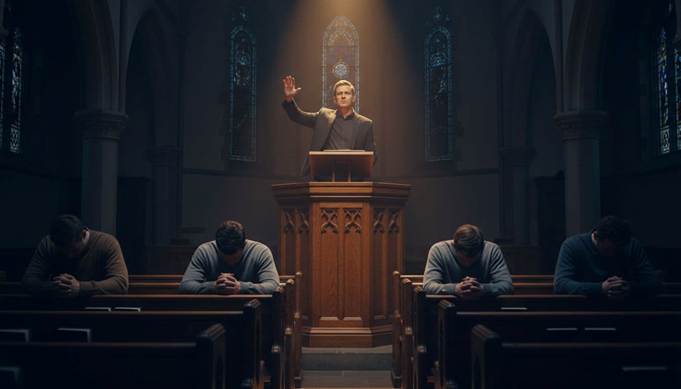
A controlling church usually discourages questions first. Members are told to trust, submit, and stop analyzing. If someone asks for context or scriptural support, leaders may frame that person as proud, cold, or unstable. In that setting, honest discernment gets treated as a threat … and the fellowship evaporates.
Shame is another common tool. Many clergy have become expert at appearing hurt. A doubting member may hear that he is grieving the Spirit, harming unity, or resisting God’s anointed servant.
Those charges can silence people fast. Shame works because many sincere believers would rather carry private confusion than public blame. Many do not even look for other churches … they just quit Christianity forever.
Some leaders also claim special insight that others cannot check. They may suggest they hear God in a higher way, understand mysteries ordinary Christians cannot grasp, or carry an authority that places them above review.
Once that idea takes hold, correction becomes nearly impossible. Members stop asking, “Is this true?” and start asking, “Am I allowed to question it?” “Should I get out of here and find a better place to serve the Lord without all this confusion?”
A healthy church does the opposite. It opens Scripture, welcomes testing, and treats truth as stronger than scrutiny. Control fears the light. Faithful leadership brings matters into it.
One silent, but major problem is that some people finally get enough of the unanswered delusions. They stop questioning and simply leave the church … or they leave Christianity entirely.
The folly of prosperity preaching and its false promises
Prosperity preaching often sounds hopeful at first. It speaks of blessing, increase, and breakthrough. Yet behind that language, it often asks people to trust a message that treats God like a system to work and faith like a tool for gain. That is where Blind Faith becomes dangerous.
The problem is not that God does not provide for His people. Scripture is clear that He cares for their needs. The trouble is the false promise that health, wealth, and success will follow if a person believes hard enough, gives enough, or speaks the right words. That message flatters the flesh, but it weakens discernment and distorts the gospel.
How prosperity preaching turns giving into a transaction
At the center of prosperity teaching is a simple but harmful claim: give more, and God must return more. Money becomes a seed, the offering becomes an investment, and prayer becomes a method for securing profit. In that system, giving no longer looks like worship. It looks like a deal … and it fails more often than not.

That idea is foolish because it reduces God to a machine. Put in enough faith, enough money, enough confession, and a reward should come out. However, biblical prayer is not a vending button, and giving is not a purchase order. God is Lord, not a banker bound to a religious formula.
This teaching also preys on pain. A struggling parent, a sick believer, or a man facing debt may hear that one more gift will unlock heaven’s favor. So the desperate give what they cannot spare, hoping for a return that may never come.
When the promised blessing fails, the blame often falls on the giver. They are told their faith was weak, their words were wrong, or their obedience was incomplete. And, the biggest guilt lie is, “You did not receive because you did not give enough to your church!”
That is cruel. It turns hardship into a sales pitch … and removes faith in GOD.
The simple table presented below shows the problem:
| BIBLICAL GIVING | PROSPERITY PREACHING |
| Given freely, with love and honesty | Given to trigger a financial return |
| Rooted in worship and care for others | Rooted in personal gain |
| Submitted to God’s will | Treated as a law that forces results |
| Done in faith, without manipulation | Pressured by promises and fear |
The damage is serious because of the depth of deception. Instead of asking, “How can I honor God?” people begin asking, “What do I need to pay to get my miracle … and do what the church says?”
That answer to a prayer is also the wrong language of faith. The answer to a prayer is NOT a miracle. It is promise fulfilled by GOD who simply says, Ask and ye shall receive. You do not have to empty your bank account into some church fund for a jet plane or something else the clergy wants (Matthew 21:22).
That is not trust. It is Blind Faith directed by greed and desperation.
In fact, there is no difference between Blind Faith and No Faith (i.e., Luke 17:6). Why? How is that? In Blind Faith, a person does not have definite faith in anything … and Luke 17:6 refers to no faith at all … but the result for both is zero faith.
When preachers promise you guaranteed returns for giving by their own example, they turn devotion into a transaction and hope into a product.
This is a non sequitur (i.e., illogical comparison) because the preacher is asking YOU for your personal contribution … but directing you to ask GOD for your reward because you sent the preacher your money.
You know what the next question is already, don’t you? Why doesn’t the preacher just cut out the middleman (you) … and go directly to GOD for his own needs instead of fiddling around with poor people like you and me? I’ll bet you already know the answer!
What this teaching gets wrong about suffering and discipleship
Prosperity preaching also misreads suffering. It often suggests that lasting hardship proves weak faith, hidden sin, or failure to claim God’s promises. Yet Scripture says otherwise. Faithful believers still suffered, and many suffered greatly.
Paul faced hunger, beatings, prison, and danger. Job lost wealth, children, and health. The prophets were rejected. Early Christians were driven from homes and cities. Above all, Christ Himself was despised, wounded, and crucified. None of that happened because they lacked faith.

This matters because discipleship includes endurance. Jesus called His followers to deny themselves, carry the cross, and remain faithful under trial. He did not promise a life padded from loss. He promised God’s presence, final reward, and strength to endure.
When churches teach that suffering always signals spiritual failure, burdened people carry two loads at once. They bear the trial itself, and then they bear false guilt on top of it.
A grieving saint may start to wonder if God has rejected him. A sick believer may assume she has failed. That lie can crush tender consciences.
Several truths need to stay clear:
- Faith does not cancel every hardship in this age.
- Obedience does not guarantee comfort, wealth, or long life.
- Suffering does not prove God has abandoned His people.
- Trials can expose error, but they can also refine faith.
Prosperity teaching wants a crown without a cross. Scripture never offers that bargain. A gospel that cannot speak honestly about suffering will mislead people the moment pain arrives.
Why prosperity messages often protect leaders, not the flock
Wealth-centered preaching often builds a stage around the leader. His lifestyle becomes part of the sermon. His clothes, stories, travel, and public image all suggest that his success proves his message. In time, the ministry can start to look less like a church and more like a brand.

That culture protects leaders in several ways. First, it makes criticism seem like envy or rebellion. If a preacher’s wealth is framed as God’s favor, then questioning it can be painted as attacking God’s blessing.
Second, pressure campaigns keep money flowing. Urgent appeals, special offerings, and dramatic promises place the emotional weight on the congregation, not on the man asking for more.
As a result, the flock is trained to fund an image. Repentance fades into the background. Service becomes secondary. Truth gets crowded out by testimonials, slogans, and constant appeals for increase. The center shifts from Christ and His word to the leader and his success story.
This is where the misdirection becomes plain. A church may talk often about faith, but the real demand is loyalty to a personality. It may speak of blessing, but the visible blessing stays concentrated at the top. That pattern should alarm any careful Christian.
Healthy leadership looks different. It teaches sound doctrine, welcomes scrutiny, and cares for weak believers without using them. It does not need Blind Faith to survive. It stands in the light, where truth can be tested.
Why many see the Trinity doctrine as confusing and unsupported
For many Christians, this issue is not about being hostile to God or careless with Scripture. It is about clarity. If a teaching is central to the faith, many expect to find it stated plainly in the Bible, not built from layers of later terms and careful formulas.
That is why the Trinity doctrine often troubles ordinary readers. They open the text, read about the Father, the Son, and the Holy Spirit, and then struggle to find the exact claim that God is three co-equal persons in one being.
When churches demand Blind Faith at that point, confusion often grows instead of fading. Discontent and personal anger often result in vacant pews in churches that cannot answer the spiritual questions and needs of its congregation.
Why the word Trinity is not the same as a clear Bible teaching
The first problem is simple. The word Trinity is not the same as a plain Bible statement. A doctrine may use a later label, but if it is said to be essential, readers expect the teaching itself to appear clearly in the text.
Many people search for a verse that says, in direct words, that God is three persons who are equal in rank and eternal in the same sense. They do not find that sentence. Instead, they find passages about God the Father, about Jesus the Son, and about the Holy Spirit. That is not the same as finding the full creed stated plainly.
There may be as many as 50,000 different Christian Creeds in the world today. This is largely the result of the proliferation of evangelism and world outreach which has produced about 50,000 different Christian denominations.
The problem with most Chistian Creeds is that they are a reflection of church doctrine … and usually not so much biblical doctrine. Just think of church creeds as manmade doctrines that mostly serve the purposes of that particular church.
Christians may try to fool the rest of the world … but Christian denominations fight like cats and dogs about why all the other Christian churches have the wrong religious messages. Why? Simple … money, power, and control.
This matters because central truths in Scripture are usually not hidden behind a puzzle. The Bible speaks clearly about one God, about Jesus as the Christ, about sin, repentance, judgment, and resurrection. So when a doctrine needs long explanations before it can even be stated, many readers pause. That pause is reasonable.
In practice, the appeal to Blind Faith can become a shield. A person asks for a direct text, and he is told to accept a church formula instead. Yet if tradition must supply the exact wording that Scripture does not plainly give, confused Christians have good reason to look again … and many just simply leave their churches.
How complex formulas can blur the Bible’s simpler claims about God and Christ
Later doctrinal language often sounds precise, yet it can also cloud what many readers see as the Bible’s simpler claims. Terms such as “co-equal persons,” “co-eternal,” and “one essence” may try to solve tensions, but they also create a wall of words between the reader and the text.

By contrast, the Bible often speaks in a simpler way. It calls the Father God. It presents Jesus as the Son of God, the Messiah, the one sent by the Father. It speaks of the Holy Spirit as God’s Spirit, active and holy. Many readers can understand those statements on their own terms. Trouble starts when later formulas are treated as if they were the plain wording of Scripture.
This does not mean every person who holds the Trinity is careless or dishonest. Many are sincere and want to honor Christ. Still, sincerity does not remove the problem.
A complicated creed can blur clear lines, much like dense fog over a familiar road. The road is still there, but people struggle to see it.
Respect matters here, but so does honesty. If ordinary believers need repeated technical lessons to explain what the Bible supposedly “really means,” then the teaching may be less obvious than they were told. That is one reason many see the Trinity doctrine as confusing and unsupported.
Why confused Christians should examine doctrine instead of inheriting it
When a doctrine feels forced, the wise response is to examine it. Many believers inherit creeds the same way they inherit church habits, by repetition. Yet repeated language can sound true long before it is tested.

A practical approach helps. Open the Bible and compare passages side by side. Notice what the text says about the Father, what it says about Jesus, and how it speaks of the Holy Spirit. Then ask a plain question: does the text itself state the creed, or does the creed go beyond the text?
A few habits can keep this work honest:
- Read full passages, not isolated lines.
- Mark the words that are actually on the page.
- Separate Bible language from later church language.
- Notice when tradition fills in what the text does not say directly.
This kind of testing is not rebellion. It is the opposite of Blind Faith. God does not ask His people to inherit confusion as if it were holiness. He asks them to love truth, test what they hear, and refuse misdirection, even when that misdirection comes dressed in ancient and respected words.
The eternal soul idea deserves close testing
The teaching of an eternal soul is common, familiar, and emotionally powerful. For that reason, many Christians absorb it early and rarely test it with care. Yet a belief can feel comforting and still need close study, especially when Blind Faith keeps people from asking whether the Bible actually states it in plain terms.
This matters because the doctrine affects how people read death, judgment, hope, and salvation. If the teaching is true, it should stand up to careful reading. If it has been assumed rather than proved, then honest Christians should want to know that as well.
How the immortal soul teaching shapes popular Christian belief
Many believers grow up with a simple picture in mind. At death, the body dies, but the real person lives on at once in heaven or torment. That view is common in sermons, funeral language, songs, and casual Christian speech. As a result, it can sound like basic Christianity even before a person studies the issue.
This is one of the greatest theological lies in all of Christian church teachings.
No one is born with an immortal soul … and the Bible very plainly teaches that … but preachers are like a dog with a favorite bone. They just cannot let it go because of the great emotional control it give them over their congregations.
The author’s book at the end of this blog plainly … and very clearly … explains why no one is born with an immortal soul (except for Jesus Christ … and that is explained in the book, also).

The appeal is easy to see. It offers quick comfort at funerals and a neat answer to painful questions. In addition, it fits what many people already assume, that humans must have some indestructible part within them. Once that idea settles in, few stop to ask where Scripture teaches it clearly.
Blind Faith often keeps the doctrine in place. People hear it from trusted leaders, repeat it in church, and then treat doubt as irreverent. Yet habit is not proof. A teaching repeated for years can still rest on weak ground, much like a house that looks solid until someone checks the foundation.
Why some readers believe Scripture points to resurrection, not natural immortality
Many readers notice that Scripture puts heavy stress on death, not on automatic life apart from the body. It often describes the dead as sleeping, returning to dust, and waiting for a future act of God. That language pushes attention forward to resurrection, not upward to an already active immortal self.

This is why some Christians grow uneasy with the immortal soul teaching. If people are already fully alive in bliss or torment, the Bible’s strong focus on the last day can seem less central.
Yet the New Testament repeatedly points believers to the return of Christ, the resurrection of the dead, and the final judgment. That pattern matters.
It is such a sad fact that churches keep their congregations as dumb and ignorant as stone statues about many religious issues. Why? For power and control!
ALL the dead are eventually resurrected … but NOT from Earth … and NOT with a physical body. The author’s book explains exactly where the dead are.
This table provides a simple contrast in beliefs about the spirit:
| Common Assumption | What The Scriptures Say |
| People possess immortal souls | Immortality is a gift of GOD |
| Dead remain fully conscious | The Spirit rests until summoned |
| Hope centers on departure from body | Hope centers on Christ’s judgment |
This does not solve every text by itself. Still, it explains why careful readers resist easy assumptions. They are not denying hope. They are asking whether biblical hope is rooted first in an immortal soul, or in God’s power to raise the dead.
When Scripture keeps pointing to resurrection, Blind Faith should not push readers back to a doctrine they were told never to question.
What changes when people question the eternal soul doctrine
Once people re-examine this doctrine, several other subjects come into sharper focus. Death may look less like a doorway the soul naturally crosses and more like an enemy that Christ must finally defeat. That change can feel unsettling at first, but it can also make the promise of resurrection far more meaningful.
Hope also shifts. Instead of resting on the idea that humans carry endless life within themselves, hope rests on God, who alone gives life and restores the dead.
That is a humbling correction. It turns attention away from supposed human indestructibility and back to divine power.
Fear can change too. Some believers have been driven by images and assumptions they never tested. When they question the eternal soul doctrine, they often become more careful readers and less vulnerable to pressure. That matters because Blind Faith thrives until fear is replaced by careful study and revelation.
Judgment and salvation also come into better focus. Salvation is provided for a mortal soul inner self. It is God’s saving work in Christ, ending in resurrection, life, and final justice. Therefore, the issue is not small or abstract. It shapes how a Christian reads the gospel story itself, from the meaning of death to the hope of the age to come.
Critical Observation: The true realization about death is that it is something that happens to our mortal body. Salvation is the provision that gives eternal life to our mortal spirit though Jesus Christ.
A better path is humble, tested faith rooted in truth
There is a better way than Blind Faith. God does not ask His people to close their eyes and follow human claims without thought. He calls them to trust Him enough to test what they hear, hold fast to what is true, and stay free from the pressure that often keeps error alive.
That path is humble because it starts with submission to Scripture, not confidence in self. It is tested because truth does not fear examination. And it is rooted because faith that grows from God’s word can endure when loud voices, old habits, and false comfort try to pull it off course.

How to test teachings without becoming cynical
Testing teaching is not the same as distrusting everyone. Cynicism assumes corruption before the facts are clear. Discernment does something better. It listens carefully, opens the Bible, and refuses to call error truth just to keep the peace.
A simple process helps keep the heart steady. First, read passages in context. A verse can be made to say almost anything when it is pulled from its setting. Read what comes before and after. Notice who is speaking, to whom, and about what.
Next, compare passages with passages. Truth will not collapse when other texts are brought into view. If a sermon depends on ignoring clear verses, the problem is not your caution. The problem is the teaching.

Then watch the fruit of a ministry. Does it produce honesty, patience, and reverence for Scripture? Or does it produce fear, dependence on a leader, and constant pressure?
Bad fruit often exposes what polished language tries to hide. The tree does not become sound because its platform is large.
It also helps to refuse pressure tactics. Truth does not need to rush you, shame you, or frighten you into agreement. When someone says, “Do not question this,” or ties doubt to rebellion, misdirection is already at work. Blind Faith often enters through that door.
Keep these steps plain and steady:
- Read the full passage, not only the quoted line.
- Compare the claim with other clear texts.
- Notice whether the teacher welcomes honest questions.
- Watch for greed, fear, flattery, or control.
- Take time before you accept bold claims.
Sound teaching can bear close testing. False teaching usually asks for quick trust.
This kind of care guards you from bitterness. You do not need a suspicious spirit. You need a clean one, willing to be corrected and unwilling to be manipulated.
Why truth matters more than comfort or tradition
Some teachings feel right because they are familiar. You may have heard them from childhood, from loved ones, or from a church you trusted. Yet familiar error is still error. A crooked ruler does not become straight because many people have used it for years.
That is why truth must matter more than comfort. A doctrine may soothe fears, protect group identity, or preserve old habits. Still, none of those things can make it biblical. Blind Faith often survives because people fear the cost of admitting that a common teaching was never sound.
Tradition can have value, but it cannot sit above Scripture. Group loyalty can feel noble, yet loyalty to error is still disloyalty to truth. In the same way, fear of standing alone can keep people quiet long after their conscience has begun to protest. That silence may look peaceful, but it leaves falsehood in place.
For confused Christians, this is often the hardest part. The issue is not only ideas on a page. It may involve friends, family, and a church history that shaped your life. Even so, truth is worth more than inherited comfort because truth belongs to God, while custom belongs to men.
A few reminders help steady the mind:
- A belief can be old and still be false.
- A teaching can be common and still lack scriptural support.
- A leader can be sincere and still be wrong.
- Standing apart for truth is better than joining error for ease.
When truth costs something, that cost reveals what rules the heart. If comfort rules, error will stay. If truth rules, a person may lose approval, but he will keep a clean conscience before God. That is the better path, and it is far safer than Blind Faith dressed in familiar clothes.
What Is The Purpose of The Millennium?
Many have heard that this is a 1000-year reign of Christ when Satan will be bound during that period. We have heard that there will be peace, happiness, and all sorts of joy and happiness with Christ’s raptured Saints ruling and reigning over the earth with Christ.
Well … here is the truth … the focus of the Millennium. The actual purpose of this 1000-year period is to show the real nature and faults of human beings without the influence of Satan (i.e., who is bound until the end of the Millennial period).
As the human populations rebuild after the destruction and death caused during the Tribulation period … the evil faults within humans will begin to take control … all without the influence of Satan.
The real purpose of the Millennium is to show that human beings are perfectly capable of being evil without the influence of Satan’s presence. This is the final judgment of the human race for all of heaven’s hosts to see and judge for themselves … and to justify GOD’s judgment to create new heavens and a new earth for a holy habitation.
Notice that the Millennial period ends with multitudes of evil human beings swooping in to destroy Jerusalem (not the New Jerusalem … that’s another story for another place). But this final attack on Jerusalem is the final act the ends in the final destruction of human beings by GOD.
Conclusion
Blind Faith is foolish because it asks sincere Christians to trust what they have not tested. As this post has shown, that kind of trust does not protect the soul, it opens the door to misdirection, control, and error dressed in religious language.
The same danger appears when prosperity preaching turns pain into profit and when familiar doctrines are accepted because they are old, popular, or emotionally useful.
A message about money can exploit the weak, and major claims about the Trinity or the eternal soul should never be assumed without clear scriptural support. Truth does not fear close reading, and error often survives because people are told to stop asking.
So the safer path is plain. Refuse teaching that demands silence, rewards gullibility, or hides behind pressure. Seek a faith that welcomes light, correction, and clear truth from Scripture, because only that kind of faith can stand without deception.
Here is an amazing new book … that explains, clarifies, and corrects much of the confusion that exists in today’s Christian churches.
GET IT NOW: GOD’s Truth About Blind Faith … for Dizzy Dummies by Rev. Randall Braxton Spell, Jr.
Digital Book: Click Here: https://www.amazon.com/dp/B0CVG53PFX
Clever voices have learned to win by sowing confusion that opens doors to mind-control. It works in war, politics, and religion. If Georg Wilhelm Freidrich Hegel had been in the Garden of Eden with Adam and Eve … the Book of Genesis would have become a conflicting Hegel soliloquy still going on today (i.e., maybe it is).
This book aims to place hearts and minds back in the hands of Jesus Christ through newly revealed knowledge.
Does anyone want real, clear answers … backed by solid Scripture that can be trusted … without blind faith and prosperity preaching?
Much new information … is available now … in this new book (GOD’s Truth About Blind Faith). Get it today … before the Millennium begins!